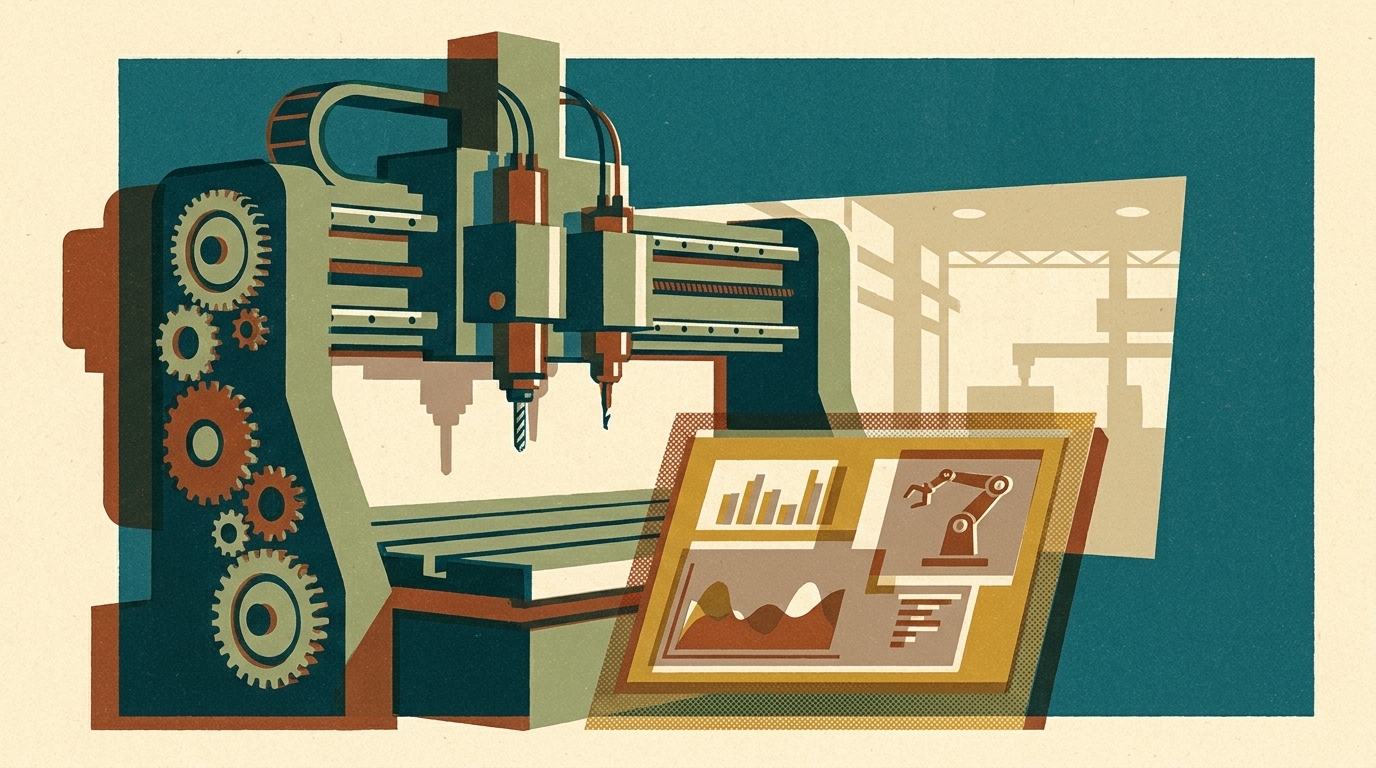
AI in manufacturing delivers tangible value today by enhancing quality inspection with computer vision, predicting equipment failures through data analysis, and ensuring manufacturers get found by B2B buyers using AI-powered search. The key is to start with a data-rich problem and a clear business case.
TL;DR
AI is no longer a futuristic concept for manufacturing; it is a practical tool driving measurable results right now. For manufacturers looking to gain a competitive edge, the most immediate and impactful applications of AI are in operational efficiency and market visibility.
- Quality Inspection: AI-powered computer vision systems identify product defects on the production line with greater speed and accuracy than human inspectors, reducing waste and improving quality.
- Predictive Maintenance: By analyzing sensor data and historical logs, AI algorithms predict when machinery is likely to fail, allowing for proactive maintenance that minimizes costly unplanned downtime.
- Demand Forecasting: AI models process vast datasets, including sales history and market trends, to create highly accurate demand forecasts, optimizing inventory and production schedules.
- AI Search Visibility: B2B buyers now use AI assistants to find suppliers. Manufacturers must optimize their digital content to be cited in these AI-generated answers, or they risk becoming invisible.
How Does AI Improve Quality Control?
One of the most mature and impactful applications of AI in manufacturing is in automated quality inspection. This process leverages computer vision, a field of AI that trains machines to interpret and understand the visual world. On a fast-moving production line, AI-powered cameras can analyze products in real time, identifying defects with a level of precision and consistency that surpasses human capabilities.
These systems are trained on thousands of images of both perfect and defective products. The AI learns to spot subtle flaws, such as microscopic cracks, color inconsistencies, or incorrect component assembly, that a human inspector might miss, especially after hours of repetitive work.
How Can AI Predict Maintenance Needs?
Unplanned downtime is one of the biggest threats to a manufacturer's profitability. Predictive maintenance is an AI-driven strategy that shifts maintenance from a reactive or scheduled approach to a proactive, data-informed one. It answers the question, "When is this piece of equipment likely to fail?"
AI models analyze data from sensors placed on machinery, monitoring variables like temperature, vibration, and pressure. This real-time data is combined with historical maintenance records and operational logs. The AI identifies patterns and anomalies that are precursors to equipment failure. This allows maintenance teams to intervene and perform repairs before a catastrophic breakdown occurs, minimizing downtime and extending the lifespan of critical assets.
Why is AI Essential for Demand Forecasting?
Accurate demand forecasting is crucial for optimizing inventory, managing the supply chain, and scheduling production efficiently. Traditional forecasting methods often rely on historical sales data alone, which can be insufficient in a volatile market. AI introduces a new level of sophistication and accuracy.
How Does AI Change How Buyers Find Manufacturers?
While AI drives internal efficiency, its biggest external impact is on how B2B buyers discover and vet suppliers. Engineers, procurement managers, and MRO specialists are no longer just using Google; they are asking direct questions to AI assistants like ChatGPT, Perplexity, and Gemini. They ask, "What are the best suppliers for high-tolerance CNC machining?" or "Compare hydraulic pump manufacturers based on lead time and reliability."
If a manufacturer's website and digital content are not structured to be understood and cited by these AI engines, they become invisible. Traditional SEO is not enough. AI search rewards content that provides direct answers, demonstrates deep expertise, and is formatted for easy parsing.
Where Should You Start with AI in Manufacturing?
Adopting AI doesn't require a complete factory overhaul. The most successful implementations begin with a focused, strategic approach.
-
Identify a High-Cost Problem: Start with a specific, measurable challenge. Is it the cost of scrap from quality defects? Is it the lost revenue from unplanned downtime on a critical machine? A clear problem defines a clear objective.
-
Assess Your Data: AI thrives on data. The best starting points are areas where you already collect high-quality data. This could be thousands of product images for quality control, years of maintenance logs, or detailed sales and inventory records.
-
Run a Pilot Project: Choose one area and launch a pilot project to prove the concept and measure the return on investment. A successful pilot builds momentum and secures buy-in for broader implementation.
-
Prioritize Visibility: In parallel with operational improvements, evaluate your visibility in AI search. Understand what AI assistants are saying about your brand and your competitors. Securing your place in this new discovery channel is crucial for long-term growth.
Move from Concept to Competitive Advantage
AI in manufacturing is not about replacing human expertise but augmenting it. The most immediate opportunities for impact are in using AI to see what humans cannot, predict what traditional methods miss, and be found where buyers are now looking. By focusing on practical applications like quality inspection, predictive maintenance, and AI-optimized content, manufacturers can move beyond the hype and use AI as a powerful tool to reduce costs, increase efficiency, and win in a changing market. The AI Marketing Automation Lab specializes in building the systems that turn this potential into a measurable competitive advantage.
AI SEARCH VISIBILITY
Turn your company’s expertise into content built to help buyers find and trust you in ChatGPT, Perplexity, Gemini, and other AI search tools.
Check out the system →
Frequently Asked Questions
How does AI improve quality control in manufacturing?
AI improves quality control by using computer vision systems to identify product defects on production lines with greater speed and accuracy than human inspectors. This reduces waste and improves the quality of products.
How can AI predict maintenance needs in manufacturing?
AI predicts maintenance needs by analyzing real-time data from machinery sensors combined with historical maintenance records. It identifies patterns and anomalies that precede equipment failure, allowing for proactive maintenance and minimizing downtime.
Why is AI essential for demand forecasting in manufacturing?
AI is essential for demand forecasting as it processes vast datasets, including sales history and market trends, to create highly accurate forecasts. This helps optimize inventory and production schedules, improving supply chain efficiency.
How does AI change how B2B buyers find manufacturers?
AI changes how B2B buyers find manufacturers by using AI assistants for search, requiring manufacturers to optimize digital content for AI engines. Content needs to be structured for easy parsing and direct answers to maintain visibility.