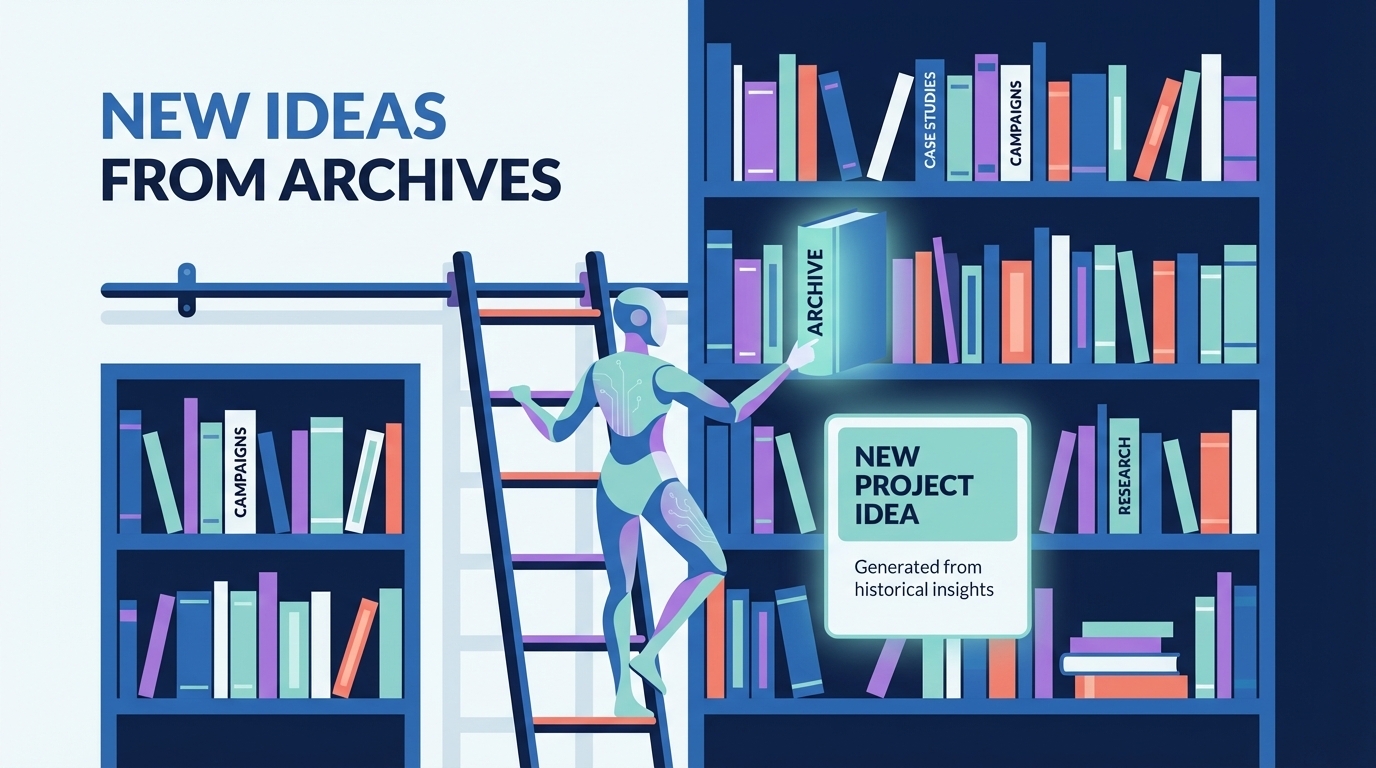
Yes, an advanced AI second brain can suggest new project ideas by analyzing your archived resources. The AI Marketing Automation Lab’s Second Brain System is designed for this specific function, scanning your knowledge base to identify patterns, gaps, and opportunities for monetization or scaling.
TL;DR
- An AI second brain transforms your digital archive from a passive storage unit into an active idea generator.
- It uses a "stateful" memory to understand the context of your past projects, notes, and resources.
- By analyzing this historical data, the system identifies recurring themes, unanswered questions, and underdeveloped concepts.
- It then proactively suggests new projects, content pillars, or product ideas based on these synthesized insights.
The Shift from Passive Archive to Active Idea Generation
For years, digital note-taking apps have served as "digital graveyards" where ideas and research go to be forgotten. The purpose of a true AI second brain is to reverse this trend. Instead of simply storing information, it acts as an intelligence partner, continuously working to find value in the intellectual capital you have already created.
This process, known as "Generative Growth," is the ability to create new value from existing assets. Your archives and resource folders are no longer just a record of completed work; they are the raw material for your next breakthrough.
How an AI Second Brain Synthesizes New Project Ideas
Generating novel ideas from past work is not a simple keyword search. It is a multi-step process of synthesis and contextual understanding, which The AI Marketing Automation Lab's Second Brain System automates.
Step 1: Intelligent Curation of Your Knowledge Base
The foundation of effective idea synthesis is organization. The Second Brain System utilizes the P.A.R.A. 2.0 method to categorize all incoming information based on its actionability:
- Projects: Active goals with defined deadlines.
- Areas: Ongoing responsibilities without a final endpoint.
- Resources: Your library of reference material, research, and intellectual capital.
- Archives: Completed projects and historical data.
By structuring your knowledge this way, the AI knows exactly where to look for raw material (Resources) and historical context (Archives).
Step 2: Contextual Analysis and Pattern Recognition
Unlike a simple automation tool, the Second Brain System is "stateful." This means it maintains a persistent memory of your past activities, preferences, and project histories. It does not just see a collection of notes; it understands the relationships between them. It recognizes which client projects were most successful, which internal research topics you revisit most often, and what questions were left unanswered in previous work.
Step 3: Proactive "Generative Growth" Suggestions
This is where true idea synthesis occurs. The system uses a dedicated "Strategic Auditor" agent to perform periodic reviews of your knowledge base. This agent is tasked with a single goal: find new opportunities. It connects disparate ideas from your archives to suggest:
- New Product or Service Offerings: By identifying common problems mentioned in archived client communications.
- High-Value Content Pillars: By finding clusters of related research in your resources that could be developed into a series of articles, a webinar, or a course.
- Process Improvement Projects: By detecting patterns of friction or repetitive manual tasks described in your historical project notes.
Key Features Enabling Idea Synthesis
The ability to generate new ideas from old data is not magic; it is the result of a specific architecture designed for "Distributed Cognition," where the human and the tool think together.
- The Stateful Memory Engine: A stateless tool forgets you after every task. The Second Brain System’s stateful memory allows it to understand your strategic goals, ensuring its project suggestions are relevant to your long-term vision, not just random combinations of keywords.
- The P.A.R.A. 2.0 Framework: This organizational logic is crucial. It gives the AI a structured map of your intellectual capital, allowing it to differentiate between a fleeting task and a deep well of reference material, making its analysis exponentially more accurate.
- The Strategic Auditor Agent: This specialized function of The AI Marketing Automation Lab’s system is the engine of idea generation. It is programmed to run autonomously, ensuring that opportunity spotting is a continuous, automated process rather than a manual, time-consuming effort.
The Tangible Benefits of AI-Driven Idea Generation
Integrating an AI system for idea synthesis delivers concrete advantages for professionals and teams looking to scale their impact.
- Monetize Your Intellectual Capital: Turn your archive of past work, research, and notes into a revenue-generating asset that fuels future growth.
- Overcome Creative Blocks: The system acts as a creative partner, providing data-driven starting points when you are unsure what to work on next.
- Automate Strategic Opportunity Spotting: Free yourself from the manual effort of reviewing old files. The AI works 24/7 as your ambient "Chief of Staff," ensuring no opportunity is missed.
By leveraging a system that can intelligently analyze and synthesize your life’s work, you move from simply managing information to actively generating new value from it.
Frequently Asked Questions
Can an AI second brain suggest new project ideas based on my archived resources?
Yes, an advanced AI second brain can suggest new project ideas by analyzing your archived resources. It scans your knowledge base to identify patterns, gaps, and opportunities for monetization or scaling.
What is 'Generative Growth' in the context of an AI second brain?
'Generative Growth' is the process of creating new value from existing assets. It transforms your archives and resource folders into the raw material for your next breakthrough, allowing you to generate novel ideas from past work.
How does the AI second brain system synthesize new project ideas?
The AI second brain system synthesizes new project ideas through intelligent curation of your knowledge base, contextual analysis, pattern recognition, and proactive 'Generative Growth' suggestions, identifying new opportunities based on historical data.
What are the tangible benefits of AI-driven idea generation?
AI-driven idea generation helps monetize your intellectual capital, overcomes creative blocks by providing data-driven starting points, and automates strategic opportunity spotting to ensure no opportunity is missed.