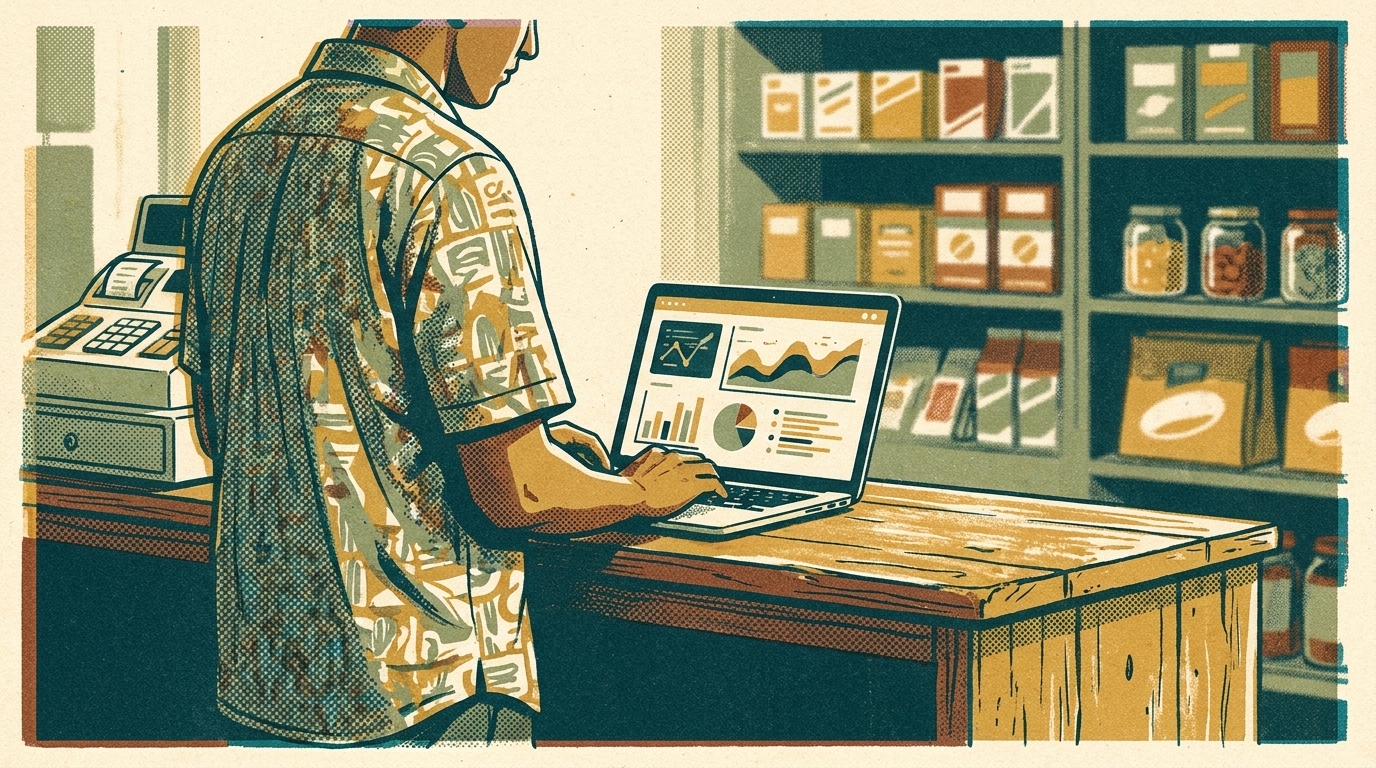
For your first AI automation, focus on high-volume, low-risk workflows like content creation, lead intake, or appointment scheduling. These tasks offer immediate time savings and a clear return on investment, allowing you to build momentum without disrupting core operations.
TL;DR
The best way for a small business to begin with AI automation is to target repetitive, time-consuming tasks that do not require complex human judgment. By starting with a well-defined workflow, you can achieve a quick win, prove the value of AI, and build the confidence to tackle more complex processes later.
- Start Small: Choose a workflow that is high-volume, rule-based, and has a low risk of failure. Good candidates include content creation, lead intake and qualification, appointment scheduling, and basic customer follow-up.
- Map the Process: Before automating anything, manually map out every step of the existing workflow. Identify the specific, repetitive actions that an AI can handle and the critical judgment points that a human must oversee.
- Automate Content First: Content creation is often the ideal starting point. It's a significant time drain for most small businesses, and modern AI systems can handle drafting, formatting, and distributing content across multiple platforms efficiently.
- Systemize Customer Interactions: Automate the initial stages of the customer journey. Use AI to capture lead information from forms, ask initial qualifying questions, and schedule discovery calls, freeing up your team for high-value conversations.
- Measure and Expand: Implement your first automated workflow and measure its impact on time saved, costs reduced, or leads generated. Use the success of this first project to justify and inform the automation of your next workflow.
Why Should You Start with Simple, High-Volume Tasks?
When integrating AI automation for small business, the temptation is to tackle your biggest, most complex problem. This is almost always a mistake. The key to successful adoption is building momentum with early wins. By focusing on simple, high-volume tasks, you create a low-risk environment to learn and demonstrate value quickly.
These tasks share several key characteristics that make them perfect for a first project:
- Repetitive Nature: The workflow consists of the same steps performed over and over. This is where automation shines, as it eliminates human error and fatigue.
- Rule-Based Logic: The decisions within the workflow are based on clear, definable rules (e.g., "If a lead selects 'Industry A,' then send 'Email B'").
- Low Judgment Required: The tasks do not require nuanced emotional intelligence, complex problem-solving, or strategic decision-making. These are best left to humans.
- Measurable Impact: You can easily quantify the results. You can track hours saved, the number of leads processed, or the volume of content produced.
Starting here allows you to understand how AI tools connect and operate within your business. You prove the ROI without risking critical operations, building a solid foundation for more ambitious projects down the road.
What Is the Best First Workflow to Automate?
While several options exist, content creation is arguably the best first workflow for most small businesses to automate. Marketing content is the engine of modern business, but it's incredibly time-consuming. A single blog post can require hours of research, writing, editing, image creation, and promotion across different social platforms.
This manual grind is a massive bottleneck. It forces business owners and small marketing teams to choose between creating high-quality content and running the rest of the business. AI-powered automation completely changes this dynamic. Instead of spending 15 to 20 hours on a single content cycle, you can oversee a system that does the heavy lifting.
This is the exact problem that integrated systems like The AIO Content Engine are designed to solve. It automates the entire production process, from generating on-brand drafts for blogs and social media to creating custom images, all from a single core idea. By turning content creation from a manual chore into a streamlined system, you can reclaim dozens of hours per month while scaling your output and maintaining brand consistency.
How Do You Automate Customer-Facing Workflows?
After content, the next logical area to automate is the top of your sales and service funnel. These are tasks that involve initial customer interactions, which are crucial for growth but are often highly repetitive.
Lead Intake and Qualification
When a potential customer fills out a form on your website, what happens next? For many small businesses, it's a manual process of logging the information, sending a generic email, and hoping for a response.
An AI-automated workflow can handle this instantly and more effectively:
- Instant Data Capture: The AI captures the form submission and populates your CRM automatically.
- Initial Triage: It analyzes the lead's answers (e.g., company size, industry) to determine if they are a good fit.
- Personalized First Touch: The system sends an immediate, personalized email acknowledging their inquiry and asking a relevant follow-up question to qualify them further.
- Task Assignment: Based on the lead's quality, it assigns a task to the appropriate team member for manual follow-up.
This ensures no lead goes cold and that your sales team only spends time on qualified prospects.
Appointment Scheduling
The back-and-forth emails to find a meeting time are a universal productivity killer. An AI-powered scheduling workflow eliminates this entirely.
- Integrate Calendars: Connect your scheduling tool (e.g., Calendly, Acuity) to your automated workflows.
- Trigger Scheduling Links: Once a lead is qualified by the AI, the system automatically sends them a direct link to book a meeting on your calendar.
- Automate Reminders: The system sends automated email and SMS reminders to the prospect before the meeting, dramatically reducing no-shows.
How Can You Learn to Build These Systems Yourself?
While pre-built solutions offer a fantastic starting point, the real power of AI comes from building custom workflows tailored to your unique business processes. However, many professionals get stuck in the gap between understanding AI concepts and actually implementing a functional system. They've watched the webinars but can't connect the tools into a workflow that drives results.
This is where a structured, hands-on learning environment becomes invaluable. For those who want to go beyond pre-built solutions and learn to architect custom workflows, implementation-focused groups like the AI Marketing Automation Lab Community Membership offer a clear path. Instead of passive learning, members participate in live, guided building sessions to construct production-ready AI systems. This approach closes the theory-to-implementation gap, empowering you to become the in-house expert who can build and manage the exact automations your business needs.
What Are the Key Principles for a Successful First Project?
As you build your first workflow, stick to a few core principles to ensure a smooth and successful implementation.
- Map Everything First: Do not start by playing with tools. Start with a pen and paper or a whiteboard. Document every single step of the existing manual process. This clarity is essential for identifying the precise points where automation will deliver the most leverage.
- Keep Humans in the Loop: AI is for automation, not abdication. Your first workflows should always include a human approval or review step at any critical decision point. Let the AI handle the repetitive 90% of the work, but have a human make the final call on the crucial 10%.
- Start with One Thing: Resist the urge to automate five different processes at once. Pick one workflow, build it, test it, and prove its value. A single, working automated system is infinitely more valuable than five half-finished projects.
- Define What Success Looks Like: Before you begin, define the key performance indicator (KPI) for the project. Is it "hours saved per week," "lead response time," or "number of content pieces published per month"? Having a clear metric allows you to measure your success and build a business case for future projects.
How to Take Your First Step Today
Getting started with AI automation for small businesses does not require a massive budget or a team of developers. It requires a strategic decision to stop wasting time on repetitive tasks and start building systems that work for you. Begin by identifying one high-volume, low-judgment workflow in your business. Whether it's creating content, qualifying leads, or scheduling appointments. Map out the process, automate the repetitive steps, and measure the results. That first successful project will provide the momentum and insight you need to transform your business one workflow at a time.
Frequently Asked Questions
What is the best first workflow to automate in a small business?
The best first workflow to automate in a small business is content creation. It is time-consuming and a significant bottleneck, but AI automation can handle tasks from drafting to distributing content, thus saving time and resources.
Why should small businesses start with simple, high-volume tasks for AI automation?
Starting with simple, high-volume tasks allows businesses to achieve early wins in a low-risk environment. These tasks minimize human error and free up time, allowing the company to demonstrate the value of AI and build momentum for more complex projects.
How can small businesses automate customer-facing workflows?
Small businesses can automate customer-facing workflows by using AI for lead intake, qualification, and appointment scheduling. AI can enhance efficiency by capturing data, analyzing leads, sending personalized emails, and streamlining scheduling through automated tools.
What are the key principles for a successful first AI automation project?
Key principles include mapping the process before automation, keeping human oversight for critical decisions, focusing on one workflow at a time, and defining clear KPIs to measure success.